
The mind that
won't stop.
Online therapy for anxiety and overthinking — with a psychologist who understands that this is not a character flaw. It is a pattern. And patterns can change.
Reach out and I send the forms · care@anaitaarthurveigas.com
Your mind doesn’t stop. So you out-think it. You out-plan it. You out-schedule it.
I get it.
I absolutely get it.
But you cannot think your way out of a pattern your body learned. You can only empty it, and then fill yourself consciously.
“Therapy with me is not sugarcoating things. Therapy with me is being direct about what’s happening and yet being compassionate with your whole self.”Anaita Arthur Veigas
Anxiety is not weakness.
It is a nervous system doing exactly what it learned to do.
At some point — usually long before you were aware of it — your system learned that it needed to stay alert. To scan for threat. To think ahead of every scenario. To prepare for the worst so the worst could never catch you off guard.
That strategy probably made complete sense once. The problem is it never got the memo that things changed. So it keeps running — at 2am, in meetings, during the rare moments you try to rest — whether the threat is real or not.
Anxiety is not a thought problem. It is a whole-body experience — the chest tightness, the jaw, the shallow breathing, the sleep that never quite lands. Therapy that only addresses thinking misses most of it.
The loop that won't close
The same thought from three different angles. The imagined conversation. The decision you cannot stop second-guessing even after you made it. The worst-case scenario playing quietly in the background of everything.
Stress that lives somewhere physical
The jaw you clench without noticing. The chest that tightens before a difficult conversation. The exhaustion of a body that never fully signals safety — even when nothing is wrong.
Avoidance dressed as productivity
Staying busy so there is no space to feel it. Saying yes to avoid conflict. Procrastinating on things that matter because the fear of doing them wrong is louder than the desire to do them.
Intelligence turned inward
Overthinking is not stupidity — it is often a very sharp mind with no off switch. The same capacity that makes you good at your work turns on you at 11pm. Therapy works with this directly.
Not just talking about it.
Actually moving it.
I work with anxiety and overthinking at every level — thought, emotion, body, and the underlying pattern that drives it. You will not leave having only described your week.
Anxiety almost always has a root. Not always dramatic — sometimes it is a learned response so old it feels like personality. We identify it, without rushing, without judgment.
Before the thoughts can settle, the body needs to learn that it is safe. Somatic tools — breath, body mapping, grounding — change the physical experience of anxiety, not just the narrative around it.
Using CBT and ACT approaches to see thoughts as events rather than facts. To stop negotiating with the overthinking loop — and start noticing it from a different position.
Not suppression. Not positive thinking. A genuine capacity to feel anxiety without being controlled by it — so you can act from steadiness rather than from the loudest fear in the room.
Evidence-based.
Applied to you, not a template.
Different types of anxiety need different approaches. I draw from six frameworks and use what actually fits.
Cognitive Patterns
Identifying and restructuring the thought loops that keep anxiety running — without toxic positivity.
Acceptance
Changing your relationship with anxious thoughts rather than fighting them. Defusion, not suppression.
Body-Based
Anxiety lives in the body. Somatic tools address where it actually sits — not just the story around it.
The Root
When anxiety has older origins, we work with the nervous system response — not just the presenting worry.
Present-Moment
Building the capacity to notice the overthinking loop from outside it — without being pulled under.
Old Patterns
When the anxiety began long before the current situation. We work with where it actually started.
Millions are managing this
in silence.
Indians lived with an anxiety disorder in 2017. Your mind is not the only one that will not switch off.
Source: Lancet Psychiatry · India State-Level Disease Burden Initiative (2019)The share of people with a mental disorder in India who go untreated, depending on the condition. Above 60% for every condition except epilepsy.
Source: National Mental Health Survey 2015–16 · NIMHANS“You can’t stop the waves, but you can learn to surf.”Jon Kabat-Zinn, Wherever You Go, There You Are
Therapy is not adding water
to a full glass.
“When we fill a glass with water, there is no space for more unless you empty it. So therapy with me will be around emptying yourself first and then filling yourself consciously. You cannot first look at why you allowed the glass to be full with water that was not consciously poured by you... and add more good water using some tools and techniques. Eventually, you wear out.”Anaita Arthur Veigas
“I used to say I don't know why people refuse to do the work. But the truth is, I know exactly why. It is called experiential avoidance. It is the absolute terror of uncertainty and the fear that if they actually feel their emotions, they will break. I get it.”Anaita Arthur Veigas
That is the line between quick tools and deep work. Tools are useful. But tools poured into a full glass just overflow, and eventually you wear out. We empty first: the beliefs, the patterns, the generational conditioning you never consciously chose. Then you fill yourself on purpose.
How we actually work.
No chaos.
This is not a casual drop-in clinic where you show up whenever you feel overwhelmed. Rebuilding your internal reality takes a structured container. Here is the exact process, step by step.
Reaching out & baseline realityThe Initiation
You reach out. If we are a potential fit, I send you the informed consent form and the baseline assessment form straight away. I need to know exactly what is in your glass before we begin emptying it.
Exploratory vs. the packageThe Commitment
Two choices. Book a single exploratory session to test whether you are ready for this level of truth, or step up and commit to a weekly package, which starts at 12 sessions. Packages are paid through Razorpay by weekly auto-debit. Single sessions and lowered-rate sessions are strictly subject to availability, because my schedule prioritises clients committed to the weekly container.
Time, date & pre-workThe Preparation
We lock in a time and date. Before we speak, you complete the pre-session form. You do not show up unprepared. You bring your reality to the table so we do not waste a single minute.
Showing upThe Session
You show up. We do not sugarcoat; we get to the truth. We balance mind, body, spirit and emotions, addressing what is actually happening with radical directness and absolute compassion.
Scheduling & feedbackThe Accountability
Before the session closes, we schedule the exact date of the next one. Therapy with me is like breathing. Therapy with me is like eating. It happens consistently. After every session you submit a feedback rating, so I can track your evolution and keep us focused on your growth.
Doing the heavy liftingThe Integration
You do not leave the work in the room. Between sessions you practise, you reflect on your notes, and you apply what we uncover to your financial, personal and social life.
Rinse and repeatThe Continuation
You show up for the next one. We keep going. We keep emptying the glass, pulling out the conditioning you never chose, and refilling you consciously until your foundation holds.
Two ways in.
One standard.
A single exploratory session lets you test the depth of the work. The package is where the work actually happens. Either way, you reach out first and I send the forms. Every session is 50 minutes.
USD 180 for international clients
- One session to experience the depth of the work
- Find out whether you are ready for this level of truth
- If it resonates, you commit to a package
- Strictly subject to availability
Weekly auto-debit through Razorpay: 12 × INR 5,000
International: USD 180 × 12 sessions (USD 2,160), by card in USD
- Exactly one session every week
- Consent, baseline and pre-session forms included
- Feedback and progress tracking after every session
- No drop-ins. No exceptions.
How payment works
- Exploratory session: one secure Razorpay payment link, sent after we confirm fit.
- 12-session package: you authorise a weekly auto-debit once through Razorpay (UPI AutoPay or card): 12 debits of INR 5,000, one per session week. Your bank sends a pre-debit notification before each debit, as RBI rules require.
- International clients: pay by card in USD through Razorpay: USD 180 per weekly session, 12 sessions (USD 2,160).
- Cancellation, rescheduling and refunds: see my policy.
Lowered rate (INR 3,750 / USD 135 per session): occasionally available, strictly subject to availability, and only for clients committing to a package. It is not a standing option. Email to check availability.
This is for you if…
- You are ready to show up every single week
- You want the truth, delivered with compassion
- You will do the work between sessions
This is not for you if…
- You want a quick fix
- You want someone to sugarcoat your excuses
- You want drop-in support whenever things feel too much (I am not a crisis service)
I am fiercely protective of my time and energy, and I take growth seriously. I do not promise outcomes; I promise honesty, rigour and a container that holds.
Not a crisis service. If you are in crisis, please contact Vandrevala Foundation +91 9999 666 555 (24/7, free) or iCall 9152987821 (Mon–Sat). Outside India: findahelpline.com.
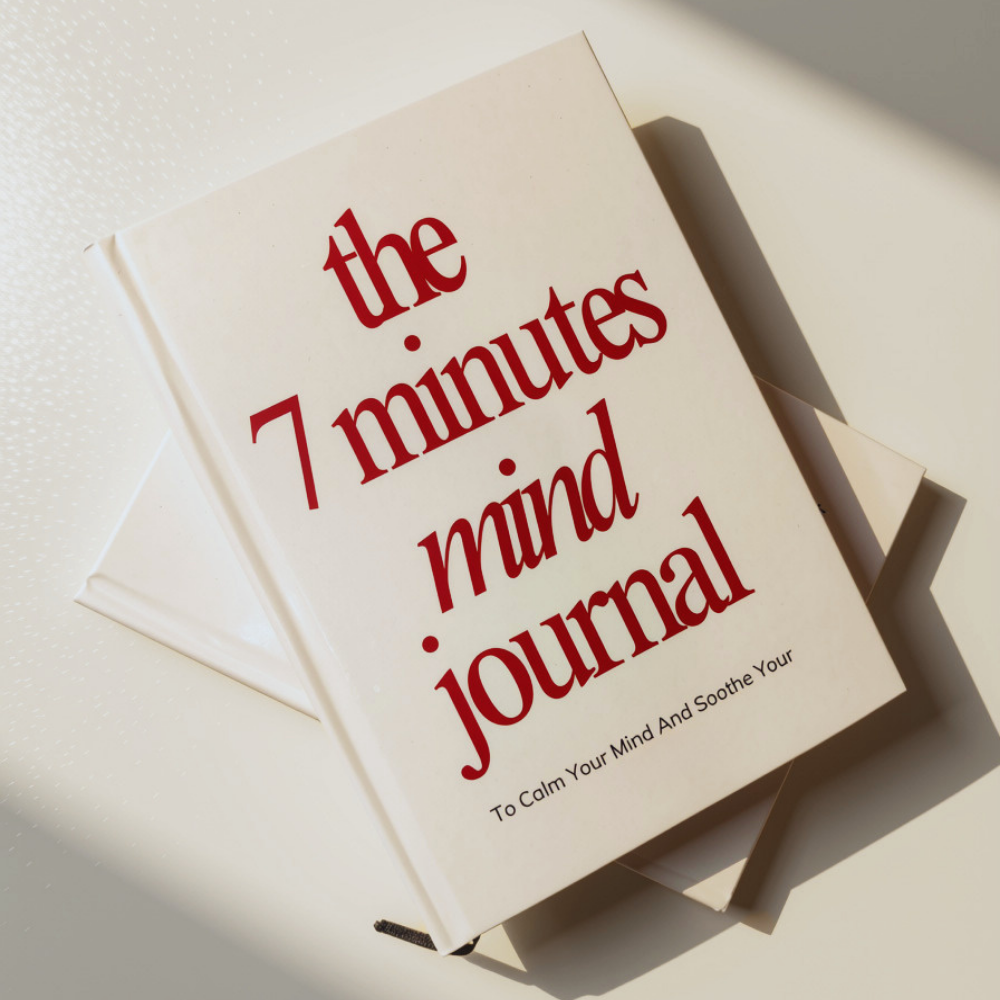
The work does not stay in the room.
Neither should the practice.
Step six of the container is integration: you practise, you reflect, you apply. The 7-Minute Mind Journal is the tool I built for exactly that. India’s first mind-body integrated self-care journal. Seven minutes a day. One clear next step. No blank pages.
- A 62-day structured system for mind, body, emotions and behaviour
- 243-page hardcover, 6×9 inches, 120 GSM paper that does not bleed
- Written by a licensed psychologist (India), for beginners and advanced journalers alike
A daily practice, not a replacement for therapy. When you are ready for the full weekly container, the package above is where the deeper work happens.
I know what anxiety feels like
from the inside.
I am Anaita Arthur Veigas — psychologist, trauma-informed therapist, and PhD Scholar in self-compassion and mindfulness. Based in Mumbai, online worldwide. Seven years and over 3,000 clinical conversations in.
My doctoral research focuses on self-compassion — which means I have spent years studying the science of how people relate to their own suffering, and what actually helps versus what keeps the loop running.
Anxiety is the presenting issue for the majority of the people I work with. Whether it arrives as overthinking, people-pleasing, creative block, perfectionism, or a body that never quite relaxes — I have worked with it long enough to know that it always makes sense in the context of the person carrying it.
Before you
email.
The exploratory session is INR 5,000 (USD 180 for international clients), 50 minutes. The starting package is 12 weekly sessions at INR 5,000 per session (INR 60,000), paid through Razorpay by weekly auto-debit (12 × INR 5,000). International clients: USD 180 per session across 12 sessions (USD 2,160), paid by card in USD through Razorpay. A lowered rate (INR 3,750 / USD 135) is occasionally available, strictly subject to availability: email care@anaitaarthurveigas.com to check.
You reach out by email at care@anaitaarthurveigas.com. If we are a potential fit, I send you the informed consent form and the baseline assessment form straight away. Once you commit, I send a secure Razorpay link for payment, we lock in a time, you complete a short pre-session form, and we begin. Nothing is casual and nothing is wasted.
A single exploratory session is available, subject to availability, at INR 5,000 (USD 180 for international clients) so you can experience the depth of the work. Beyond that, the work happens in a weekly package of 12 sessions at INR 5,000 per session. This is not a drop-in clinic. If you are in crisis right now, please contact Vandrevala Foundation +91 9999 666 555 (24/7) or iCall 9152987821 (Mon–Sat).
Most people notice a shift in awareness and self-understanding within 4–6 sessions. The experience of anxiety often softens before the pattern fully changes. Deeper change — the kind where the loop genuinely loses its grip — takes longer. We track this together and I am always honest about where you are in the process.
Occasionally (INR 3,750 / USD 135 per session), strictly subject to availability and for clients committing to a package. It is not a standing option. Email care@anaitaarthurveigas.com to check.
Because anxiety is a pattern, not an event. Coming only when it spikes teaches your system that support is for emergencies, and the pattern stays. Weekly sessions build the steadiness that prevents the spike. Therapy with me is like breathing. It happens consistently.
Yes. Therapy and medication work well together and address different aspects of anxiety. I am not a psychiatrist and do not manage medication — but many clients come to therapy alongside pharmacological support. Please inform me of any medication so I can account for it in how we work together.
Please contact a crisis line immediately. Vandrevala Foundation: +91 9999 666 555 (24/7, free) or iCall: 9152987821 (Mon–Sat). Therapy is not crisis intervention — it is sustained, ongoing work. If you are in acute distress, please reach out to iCall or go to your nearest emergency service. You can email me once you are stable and we will take it from there.
The loop can
actually stop.
Not through willpower. Not through positive thinking. Through understanding what is running it — and building a genuine capacity to respond differently.
care@anaitaarthurveigas.com · Reach out and I send the forms · Online worldwide